Preprints vs peer-reviewed papers: what's the difference, and why should you care?
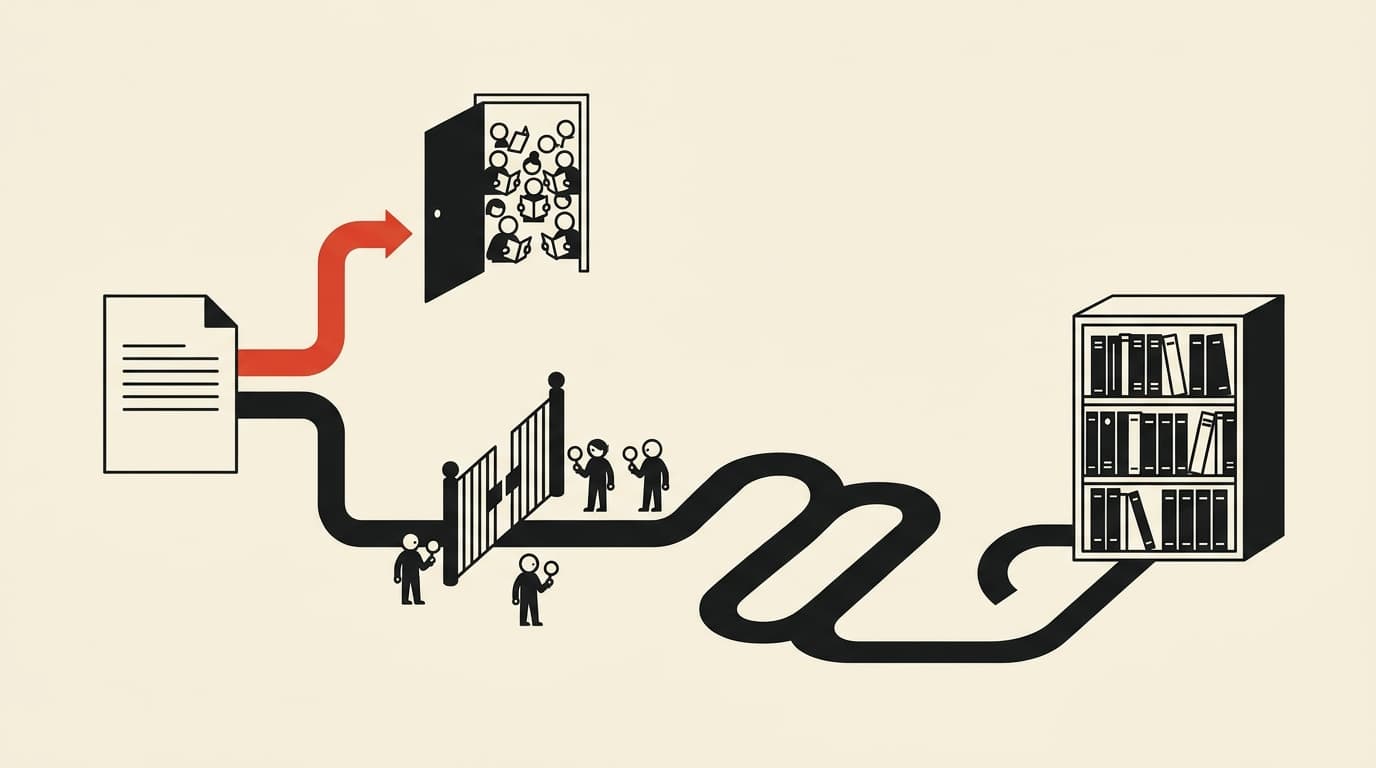
A preprint is a finished study that has not been checked by anyone yet; a peer-reviewed paper is one that a journal has had experts scrutinise before publishing. Both can be found in a literature search, both have a DOI, and both can look equally convincing on a screen. Knowing which one you are reading changes how much weight you should give it.
This matters more every year. When you search for papers for a thesis, an exam or a journal club, a growing share of what comes up, especially in genetics and genomics, is a preprint. In this note I explain what each route is, where they differ, why the line between them is blurring, and how to read a preprint without being fooled or being unfairly dismissive.
What a preprint is
A preprint is a complete manuscript that the authors post publicly, for free, before (or while) it goes through peer review. It is usually the same text they send to a journal: introduction, methods, results, figures, references.
Physicists started the habit in 1991 with arXiv. Biology followed much later: bioRxiv opened at Cold Spring Harbor Laboratory in 2013, and medRxiv, for clinical and health research, in 2019. Since March 2025 both are run by openRxiv, an independent non-profit. Together they post around 5,000 new preprints a month and hold more than 335,000 in total (Yale School of Medicinecite).
Before a preprint goes online, the server only screens it: is it real science, in scope, not plagiarised, not dangerous? Nobody checks whether the methods are sound or the conclusions follow from the data. Every bioRxiv page says so in a banner, and it is worth taking that banner literally.
For authors, a preprint has two more advantages: it gives a public, time-stamped record of who found something first, and it usually does not count as prior publication, so the work can still go to a journal (University of Rochester Librariescite). Check the policy of the journal you have in mind, though.
How classical peer review works

In the classical route, authors submit to a journal and an editor decides whether the paper is worth sending out. If it is, usually two or three experts in the field read it privately and send reports. The editor then accepts, rejects, or asks for revisions, sometimes new experiments, and the cycle can repeat. The whole process often takes months (Yale School of Medicinecite).
Good peer review catches a lot: unclear methods, missing controls, conclusions that go beyond the data, statistics done wrong. As a reviewer, most of my comments are of this kind, and papers come out better for them.
But peer review is a filter, not a guarantee. Reviewers do not repeat the experiments and rarely see the raw data, so honest errors and, occasionally, fraud can slip through. Two or three people can also simply miss things, or share the same blind spots. A peer-reviewed paper is more trustworthy on average, not true by definition: retractions happen in excellent journals too.
The two routes side by side
The real difference is not quality but timing and checking: a preprint is out in a day and checked afterwards by whoever reads it; a journal paper is checked first and out months later.
| Preprint | Peer-reviewed paper | |
|---|---|---|
| Time to appear online | A day or two after submission | Usually months |
| Who has checked it | A quick screening by the server | An editor and two or three expert reviewers |
| Cost to read | Free | Free if open access; otherwise behind a paywall paid by libraries |
| Cost to publish | Free | Usually free for paywalled articles; open access normally means a fee paid by the authors |
| Can it change? | Yes, authors post new versions | Rarely, through corrections or retraction |
| Has a DOI and can be cited | Yes | Yes |
| Counts for careers and grant panels | Increasingly, but less | Yes, still the main currency |
A word on open access, because the name is misleading: it means free to read, not free to make. The cost simply moves from readers to authors, through an article processing charge. eLife charges $3,750 per reviewed article, waived for authors who cannot afford it (eLifecite); when Nature launched its open access option in 2020 the fee was €9,500 (Physics Todaycite). Preprint servers are free on both sides, which is one reason funders like them.
How much does peer review actually change a paper? Less than you might think. A careful comparison of 184 preprints from bioRxiv and medRxiv with their published versions found that, outside COVID-19, only 7.2% had a major change in the conclusions of the abstract, and just one paper out of 184 ended up contradicting its preprint. For non-COVID papers the median gap between preprint and journal was 101 days (Brierley et al., PLOS Biology 2022cite).
The same study found that COVID-19 preprints, written in a hurry, changed more: 17.2% had major changes. Speed has a price, and it is paid in the papers rushed out under pressure.
Peer review does leave a mark on the details, though. A 2026 review of 40 studies in health research found that journal versions report funding, conflicts of interest, ethical approval and limitations more often and more completely, define outcomes more clearly and contain less spin, while titles, primary outcomes, effect estimates and conclusions stay largely the same (Zoghbi et al. 2026cite). The main message rarely changes; the paper becomes easier to check. Part of this may come from journal submission rules rather than from the reviewers themselves.
How big is that effect? When Carneiro and colleagues compared 56 bioRxiv preprints with their own journal versions, reporting improved by 4.7 percentage points on average, roughly one extra item out of about 26 checked. The largest single change was the conflict of interest statement, present in 46% of preprints and 84% of journal versions, exactly the kind of item journals require at submission. And in 27% of the pairs reporting actually got slightly worse (Carneiro et al., Research Integrity and Peer Review 2020cite).
One more reason to read these comparisons with care: a preprint is not always posted before review. In one widely cited study of COVID-19 preprints, a later reanalysis found that about 20% had been posted after the journal had already accepted the paper, so part of the review had happened before the "preprint" existed (Anderson, Lancet Global Health 2023cite; in reply, the authors agree that their study measured change between versions rather than the effect of peer review itself, while maintaining that the data were highly stable and that preprints are a valid source of evidence, Hutchins 2023cite). Comparisons like these measure how much a paper changes between versions, not the pure effect of peer review.
How many preprints end up in a journal?
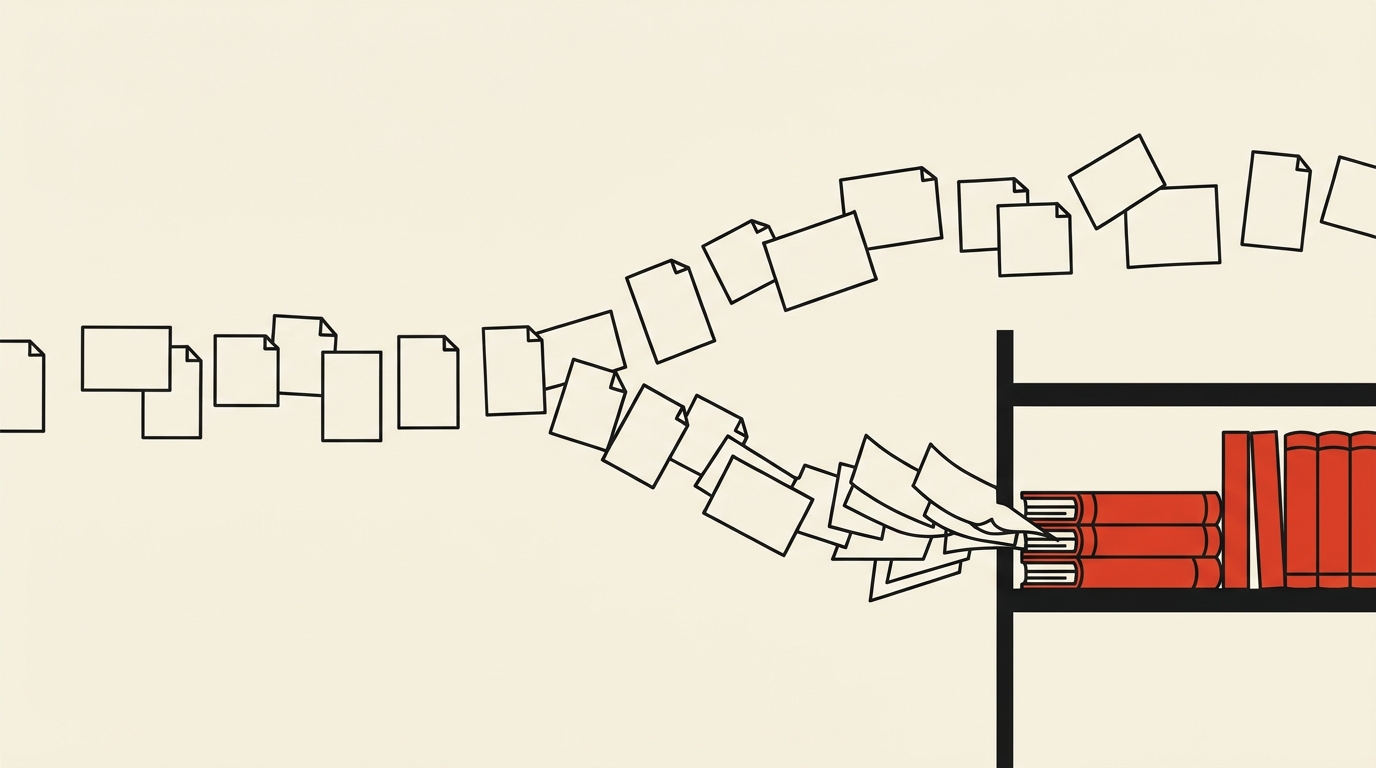
It depends a lot on the field and on how long you wait. The 2026 review mentioned above pooled 30 studies of health-related preprints and found that a median of 42% were eventually published in a peer-reviewed journal, with half of the studies falling between 22% and 67% (Zoghbi et al., Research Integrity and Peer Review 2026cite). Individual studies that followed preprints for longer report higher figures:
| Study | Preprints analysed | Published in a journal | Typical delay |
|---|---|---|---|
| Janda et al., JAMA Network Open 2022 | 1,399 clinical preprints posted on medRxiv in September 2020 | 77% within two years | Median 6 months |
| Abdill & Blekhman, eLife 2019 | All 37,648 bioRxiv preprints, 2013 to November 2018 | 67% of those posted by 2016 | Median 166 days |
Three caveats when you read numbers like these. First, they are probably underestimates: when Abdill and Blekhman checked a sample of supposedly unpublished bioRxiv preprints by hand, 37.5% had in fact appeared in a journal. Second, recent preprints always look unpublished, simply because they have not had time: of the preprints posted in 2018, only 20% had been published by the end of that year. Third, the preprints that never reach a journal are not necessarily bad science. Some were never submitted, some report negative or descriptive results that journals rarely take, and some were rejected; the studies cannot tell these apart. There is a hint, though: in one study, preprints that later reached a journal had better reporting on average than those that did not, which suggests the journal system does act as a filter (Carneiro et al. 2020cite).
The line is blurring
Today the two routes are less alternatives than two stages of the same path. A large and growing share of biology papers now exists as a preprint first and a journal article later, and most journals in the field accept manuscripts that are already on a preprint server. In human genetics, large consortium studies very often appear on medRxiv months before the journal version.
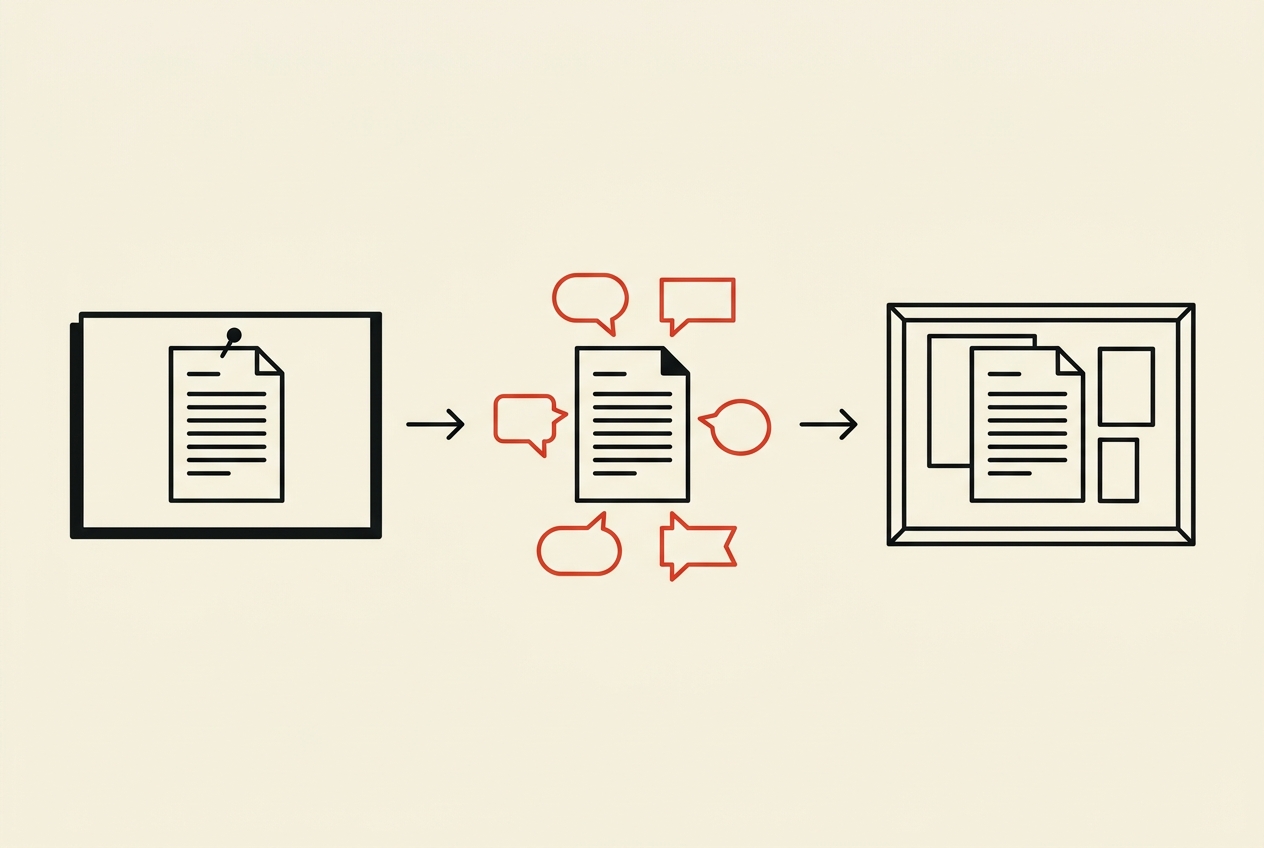
Some journals have gone further. Since January 2023, eLife no longer accepts or rejects papers after review: every article it reviews is published as a Reviewed Preprint, together with the public reviews and a short assessment of how important the findings are and how solid the evidence is (eLifecite). The review becomes part of what you read, instead of a verdict you never see.
eLife is the best-known example of a broader idea called publish, review, curate: the paper goes online first, independent services such as Review Commons, PREreview or Peer Community In review it in public, and a journal or another body may then select it. Even its supporters warn about one trap: a preprint marked as "reviewed" is not necessarily "validated". Public reviews list strengths and weaknesses, but unless an editor takes an explicit decision, it is still up to you to judge whether the criticisms were answered (Bourguet and Guillemaud, cOAlition S blog 2024cite).
Funders are pushing in the same direction. Since January 2025 the Gates Foundation requires the research it funds to be posted as a preprint, and it no longer pays article processing charges for journals (Gates Foundationcite). Others are moving the same way. For you as a reader, this means one thing: preprints are not going away, so you need to know how to read them.
Do preprints count for your career?
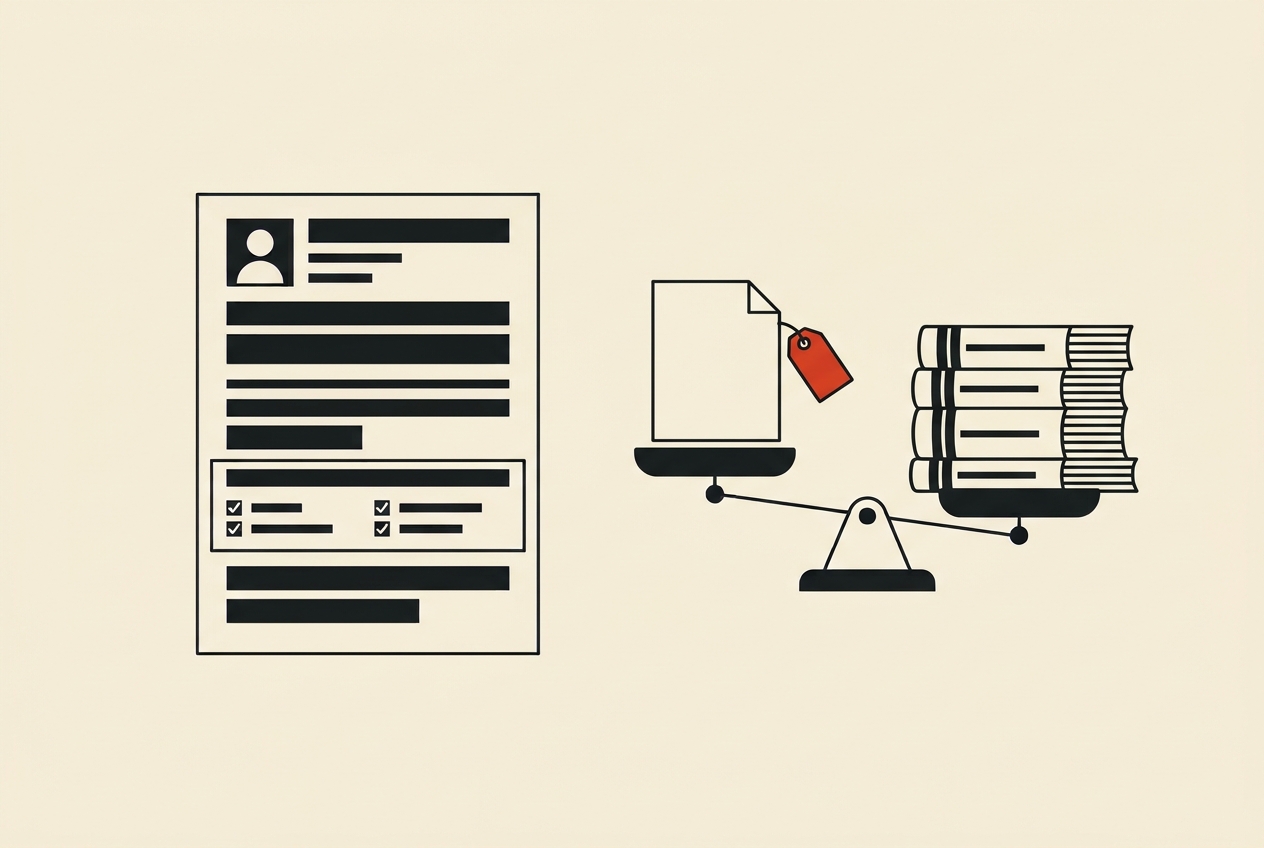
It depends on who is evaluating you. Many hiring and promotion committees still look mainly at peer-reviewed articles and at where they were published. In a survey of 317 early-career researchers looking for faculty positions, 55% had posted at least one preprint, and 10 of the 15 search committee members surveyed said preprints were viewed favourably; published papers and journal metrics, however, still carried more weight (DORA 2021cite).
In Italy the formal rules are clear. The national research assessment exercise (VQR 2020-2024) accepts only the published version or the author's accepted manuscript, both after peer review, so a preprint cannot be submitted (University of Florence VQR guidecite). The national habilitation (ASN) counts articles in journals indexed in Scopus or Web of Science (University of Modena and Reggio Emilia librarycite), so preprints do not enter the indicators either.
Outside Italy, the major research funders are much more open. Here is how some of the most prestigious ones treat preprints in grant applications:
| Funder | Country | How preprints are treated |
|---|---|---|
| European Research Council (ERC) | EU | Considered in the track record at the evaluators' discretion, if cited with a link or DOI |
| DFG | Germany | Can be listed as publications in the CV; manuscripts only "submitted" or "in review" cannot be listed at all |
| MRC (UKRI) | UK | Can be cited if they have a DOI; reviewers are told to judge the content, not where it was published |
| Wellcome | UK | Allowed and encouraged in applications |
| NIH | USA | Since 2017 can be cited wherever other research products are cited |
| HHMI | USA | Required: initial and revised preprints for major papers submitted from January 2026 |
| VQR and ASN | Italy | Not counted |
The DFG rule is worth noticing: in Germany a preprint is worth more on your CV than a paper "under review", because only the first can be listed. Three conditions come up almost everywhere: the preprint needs a permanent identifier such as a DOI, it must be clearly separated from peer-reviewed papers, and how much it weighs is left to the judgement of the reviewers (ERCcite; DFGcite; MRCcite; NIHcite; HHMIcite).
Rules on paper do not always match what panels do, though. In 2019 some NIH reviewers were still listing cited preprints as a weakness of an application, despite the official policy (ASAPbiocite). Several French universities, on the other hand, accept preprints recommended by Peer Community In towards PhD graduation requirements (DORA 2021cite).
And there is one cautionary tale. In 2021 the Australian Research Council declared 32 applications for early-career and future fellowships ineligible because they cited preprints, all of them from physicists, for whom posting on arXiv is standard practice. After a wave of protest the council dropped the rule within weeks, leaving experts in each discipline to judge the outputs cited, and in December an appeals committee ruled all 32 applications eligible (Times Higher Education, September 2021cite; December 2021cite). The episode shows how quickly a ban on preprints can collide with the way a whole field works.
In practice: a preprint is a good way to make your work visible early and to establish priority, especially during a thesis or a PhD, but it does not replace the journal article. List preprints in a separate section of your CV, with their DOI, and update the entry when the paper is published.
How to read a preprint: a checklist
Read a preprint the way a reviewer would, because nobody has done it for you yet. These are the questions I ask myself, in this order.
- Has it been published since? On bioRxiv and medRxiv, a link at the top of the page appears when a journal version exists. If there is one, read and cite that instead.
- Are there newer versions? Check the version number. Version 3 may correct an error in version 1.
- Do the methods let you judge the work? Sample size, controls, statistics, and whether data and code are available. In genetics: how many cases and controls, and was there a replication cohort?
- Do the conclusions match the data? Be wary of big claims built on a single experiment or a small sample.
- What are other experts saying? Look for comments, public reviews, or a Reviewed Preprint assessment.
- Who are the authors? A track record in the field is not proof, but an unknown group making an extraordinary claim deserves extra caution.
And when you cite one, in a thesis or a report, say so: write "preprint" in the reference, with the server and version. Your examiner will check, and so should you. And in anything that could guide a clinical or policy decision, treat evidence that exists only as a preprint as preliminary.
My take
I post preprints and I read them every week, and I think the honest summary is this: a preprint is not a weaker kind of science, it is science that has not been checked yet. Most preprints turn out fine; a few do not, and the reader is the only filter in between.
So do not dismiss a result because it is "only a preprint", and do not trust a result because it is "published in a good journal". In both cases, the question is the same one you would ask in a journal club: do the data support the claim? Learning to answer it yourself is one of the most useful skills a degree in biology can give you.
Sources
- Yale School of Medicine, Yale researchers part of openRxiv launch to secure the future of open science, March 2025
- Brierley L, Nanni F, Polka JK, et al. Tracking changes between preprint posting and journal publication during a pandemic. PLOS Biology 2022; 20(2): e3001285
- eLife, Peer review and publishing at eLife
- Gates Foundation, Open Access Policy 2025
- Abdill RJ, Blekhman R. Tracking the popularity and outcomes of all bioRxiv preprints. eLife 2019; 8: e45133
- Janda G, Khetpal V, Shi X, Ross JS, Wallach JD. Comparison of clinical study results reported in medRxiv preprints vs peer-reviewed journal articles. JAMA Network Open 2022; 5(12): e2245847
- Physics Today, Nature journals debut open-access models, December 2020
- Zoghbi MS, Ali A, Hamade L, et al. Comparison of preprints and their corresponding peer-reviewed publications in the health field: a scoping review. Research Integrity and Peer Review 2026; 11: 3
- Carneiro CFD, Queiroz VGS, Moulin TC, et al. Comparing quality of reporting between preprints and peer-reviewed articles in the biomedical literature. Research Integrity and Peer Review 2020; 5: 16
- Anderson KR. Preprints versus peer-reviewed articles. Lancet Global Health 2023; 11: e194, and the authors' reply, e195
- Bourguet D, Guillemaud T. Peer-reviewed preprints and the Publish-Review-Curate model. cOAlition S blog, October 2024
- University of Rochester Libraries, Pre-prints & peer review
- DORA. Preprints in academic assessment, August 2021
- European Research Council, Webinar on ERC Work Programme 2025, questions and answers, September 2024
- DFG, FAQ: List of publications
- Medical Research Council (UKRI), Preprints
- NIH, NOT-OD-17-050: Reporting preprints and other interim research products, March 2017
- HHMI, Immediate Access to Research policy, 2025
- ASAPbio, Funder policies on preprints and feedback to NIH CSR, 2019
- Times Higher Education, Australian Research Council abandons preprints ban, September 2021, and Australian researchers win appeals over preprints ban, December 2021
- University of Florence, VQR 2020-2024: submitting research products
- University of Modena and Reggio Emilia library, ASN indicators
Last updated: 26 October 2026